
Interstyl Hustler
Is the Interstyl Hustler a rare car?
According to Hagerty a rare car is defined by low production numbers, a low survival rate, or unique historical status. By this definition then yes, these are rare cars
Low production numbers?
On this there is widespread disagreement. According to Autopian, Hemming’s report ‘no less’ than 15 versions were available whilst Below the Radar noted 72 versions. Wikipedia lists just 12 variants. Interstyl’s own price lists vary with 11 models on one list in 4 or 6 wheel versions plus another three published Interstyl price lists vary by degree. In addition Interstyl supplied Hustler 6 lower chassis for bespoke building elsewhere; Ice Stars. Built in Driffield by Vendavan Ltd.
Other production number claims published over the years include:
• 3 Hustler 6 Space Shuttles – Bonhams
• 4 Hustler Sports – private eBay Advertiser
• 7 Vendavans – MaximumMini
• 8 Hustler Highlanders – Bonhams
• 8 Hustler Highlanders – Honest John
• Less than 75 six wheelers were built – JB Restorations
• 80 DIY Hustler Kits – Bonhams
• 170 Built by 1984 – Autocar
• 200 Kits sold – ARONLINE
• 200 in 10 years from 1979 (4/14) – Around 80 in the 1980’S (6/18) – Honest John
• 300 Hustlers in total – Bonhams
• Only 300 Kits or so were sold across the model range – Classic.Retro.Modern
• 500 Total by run end – Autocar
So the actual number made either by Interstyl themselves or by builders using plans and supplied kits remains unclear. Wikipedia originally posited in April 2018 that about 500 were made but left this figure needing citation. ‘Honest John’ reports that 280 were supplied as kits which suggests a total including Interstyl own builds and demonstrators of some 300. ARONLINE confirms 200 kits, Bonham’s state 300 Hustlers in total of which 8 were Highlanders, Classic.Retro.Modern confirm Bonham’s 300 number whilst JB Restorations say that only 75 six wheelers were ever built. By June 2026 106 Hustlers had been pictured in the press or on the web since 1978. Even adding in the Vendavan variant built on the 6 wheel chassis it’s unlikely that more than 300 ever came into being (hustler-registry.org)”
A low survival rate?
Graham Lithgow (owner of two Hustler 6’s in Wood) created in June 2026 a Spreadsheet recording the 106 Hustlers widely pictured with number plates visible since their introduction in 1978. (Two others at least known to exist but with registration numbers obscure) They are registered as a Hustler, a Hustler variant or double barrelled with another name e.g., Austin Hustler. Those that are not named Hustler remain registered as their donor car (Austin Mini, Morris Mini, MG or Allegro)
Up to seven Hustler 6 based ice cream vans were made as the Vendavan Ice Star. Six are recorded in the Spreadsheet, two with VED, one on SORN. So around a third of all Hustlers ever produced appear to have survived. The wooden ones lasting rather better than the steel framed ones
Unique historical status
The original 1978 design was created by William Towns, well known for his wedge shaped Aston Martin Lagonda. This iconic designer is the subject of many specialist reviews including one in Wikipedia. He eventually built both kit and complete Hustler variants through his Interstyl design studio.
At the time small specialist car makers like Lotus were using a two part manufacturing technique. Top and bottoms sections made separately then married in production. The first 4 wheeled Hustler used upper and lower square-section steel frames, clad with glass fibre panels and large flat glass windows. Sliding side windows acted as doors on the majority of models. Towns called them ‘Windoors’ Like other specialist or kit cars of the era the front and rear sub frames and mechanical components came from the original Mini and it’s related models MG, Metro or Allegro. Once from a Maxi. The Hustler concept evolved into four and six wheel versions (the six wheel version used two Mini rear sub frames) Hustlers anticipated SUV’s many years ahead of the market with style very much leisure utility but with the clean linear design principles inherent in both the Lagonda and the Bulldog.
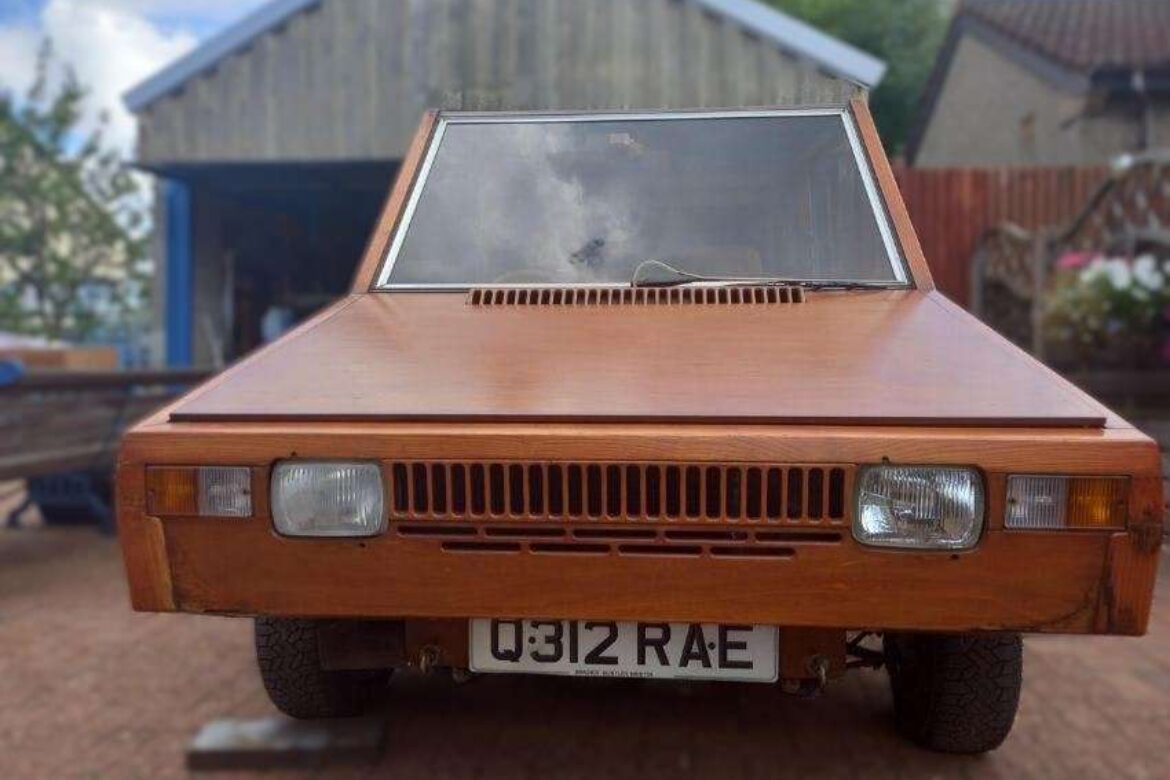
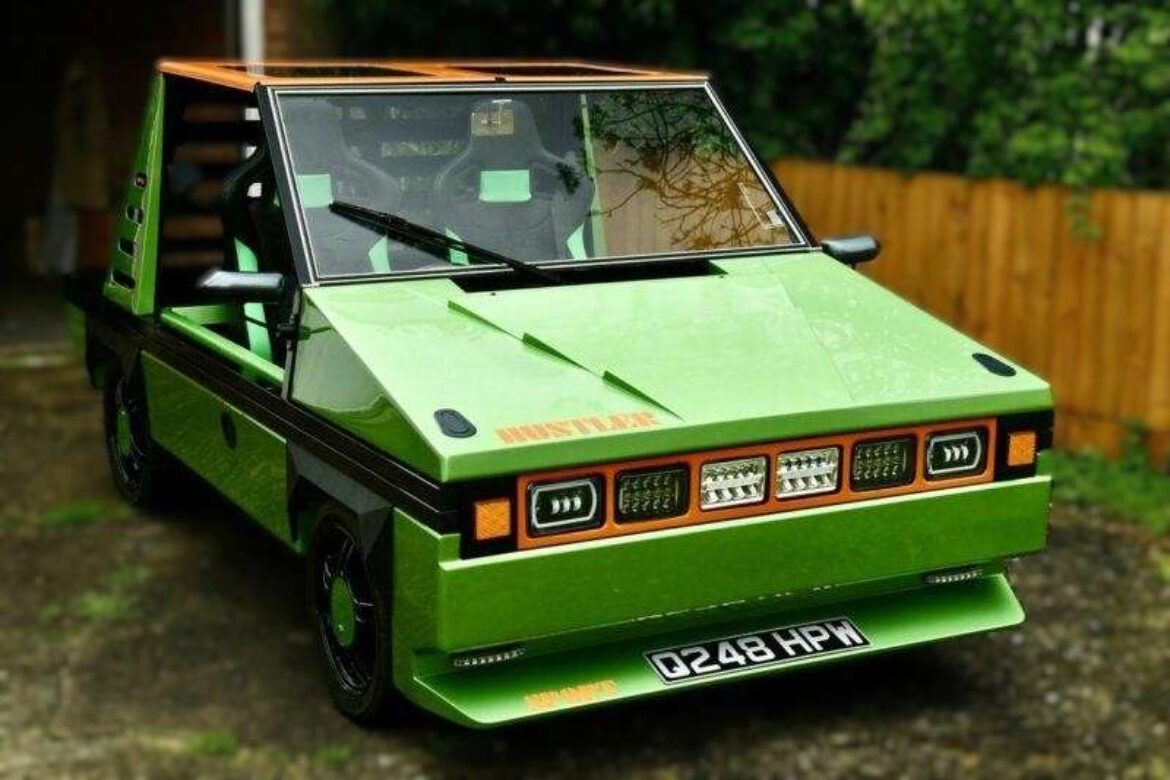
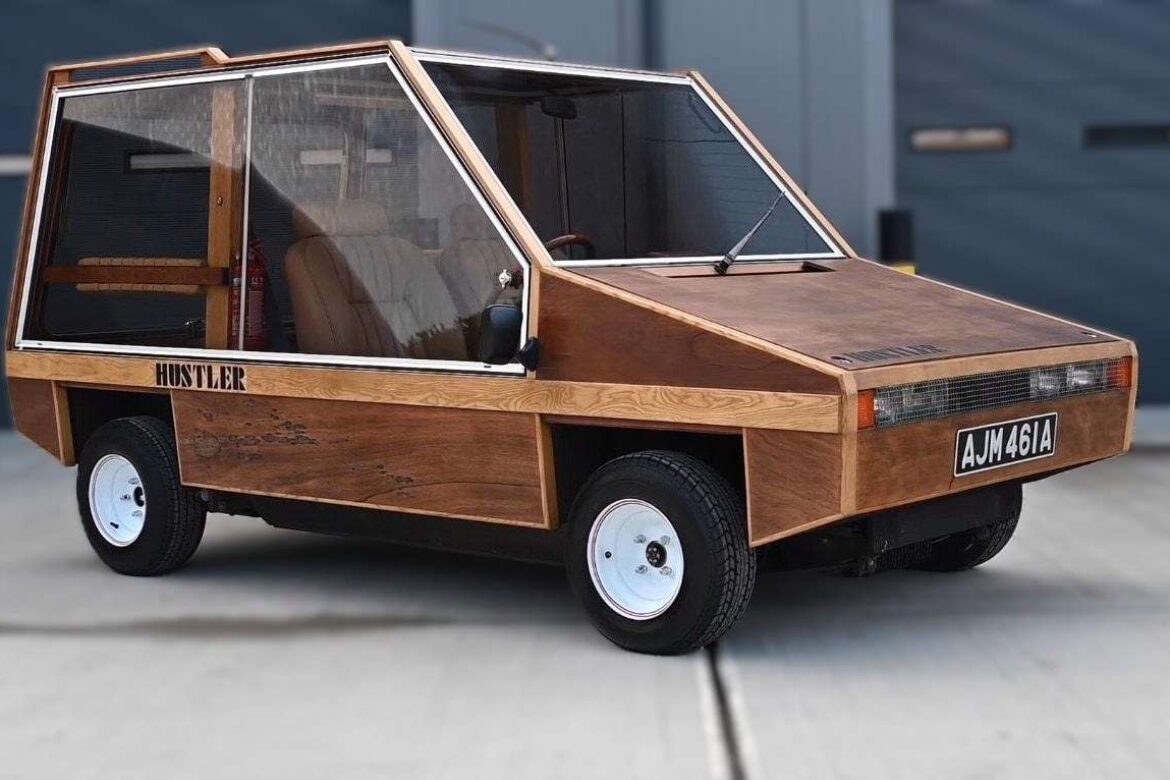
Again ahead of his time Towns introduced a car to be made of wood such that Mini mechanicals could be exported at low cost and bodies built from trees in then emerging parts of the world. The car was introduced at the 1981 Earl’s Court Motor Show called, unsurprisingly, Hustler (4 or 6) in Wood. It was constructed from marine plywood box sections and solid hardwood – a virtual wooden monocoque. Two GRP ‘Sports’ version were introduced, using the same lower steel structure but with a reduced upper body and one open topped.
All models, either built or in kits, were sold by William Towns himself from his Interstyl Studio based in his home estate. Stretton-on-Fosse, near Moreton-in-Marsh, England. Proud owners gathered there to share their own builds.